
The Magic of Crystal Platonic Solids: Balancing Energies in Your Space
PLATONIC SOLID
History of Platonic Solid
The history of Platonic solids dates back to ancient Greece, where they were first studied by the philosopher Plato, who associated these geometric shapes with the classical elements—earth, air, fire, water, and the cosmos. Plato described the solids in his dialogue "Timaeus," positing that the universe was constructed from these five perfect forms, which he believed represented the fundamental building blocks of nature. The five Platonic solids—tetrahedron, cube, octahedron, dodecahedron, and icosahedron—are characterized by their regularity, with faces that are congruent regular polygons and the same number of faces meeting at each vertex. While Plato's philosophical interpretations laid the groundwork, the study of these shapes continued through the ages, influencing mathematicians and philosophers, including Euclid, who detailed their properties in his work "Elements." During the Renaissance, the revival of interest in classical knowledge saw further exploration of Platonic solids, linking them to art, architecture, and the study of the natural world. Today, Platonic solids are recognized not only for their mathematical significance but also for their aesthetic appeal and role in various scientific fields, including crystallography and theoretical physics.
Top of Form
What is Platonic Solid?
 A Platonic solid is a
three-dimensional geometric shape distinguished by having congruent regular
polygons as its faces, with the same number of faces meeting at each vertex.
There are exactly five Platonic solids: the tetrahedron, which has four triangular
faces and represents the element of fire; the cube (or hexahedron), composed of
six square faces symbolizing the element of earth; the octahedron, featuring
eight triangular faces associated with the element of air; the dodecahedron,
consisting of twelve pentagonal faces representing the cosmos or ether; and the
icosahedron, made up of twenty triangular faces and linked to the element of
water. These shapes are unique in that they are the only convex polyhedra with
identical faces, edges, and angles, making them significant in various fields
such as mathematics, philosophy, and art. Their inherent symmetry and
regularity have led to their exploration in areas like crystallography,
architecture, and gaming, highlighting their enduring relevance across disciplines.
A Platonic solid is a
three-dimensional geometric shape distinguished by having congruent regular
polygons as its faces, with the same number of faces meeting at each vertex.
There are exactly five Platonic solids: the tetrahedron, which has four triangular
faces and represents the element of fire; the cube (or hexahedron), composed of
six square faces symbolizing the element of earth; the octahedron, featuring
eight triangular faces associated with the element of air; the dodecahedron,
consisting of twelve pentagonal faces representing the cosmos or ether; and the
icosahedron, made up of twenty triangular faces and linked to the element of
water. These shapes are unique in that they are the only convex polyhedra with
identical faces, edges, and angles, making them significant in various fields
such as mathematics, philosophy, and art. Their inherent symmetry and
regularity have led to their exploration in areas like crystallography,
architecture, and gaming, highlighting their enduring relevance across disciplines.
Where to Use Platonic Solid?
- Art and Design:
Artists and designers often incorporate Platonic solids into their works, using
their aesthetic appeal to create sculptures, jewelry, and decorative items.
- Education:
Platonic solids are often used in mathematics and geometry education to help
students understand concepts of symmetry, shape, and spatial reasoning.
- Home Decor:
Decorative objects shaped like Platonic solids can be used in home decor,
serving both as artistic pieces and conversation starters.
- Energy Work:
In crystal healing and energy practices, platonic solids can serve as tools for
channeling energy.
- Decorative Items:
They are popular as decorative objects in homes and offices, often made of
crystal or metal, appreciated for their geometric beauty.
- Craft
and DIY Projects:
Platonic
solids can serve as interesting bases for crafting projects, including jewelry
making, model building, or creating unique art pieces.
How to Use Platonic Solid?
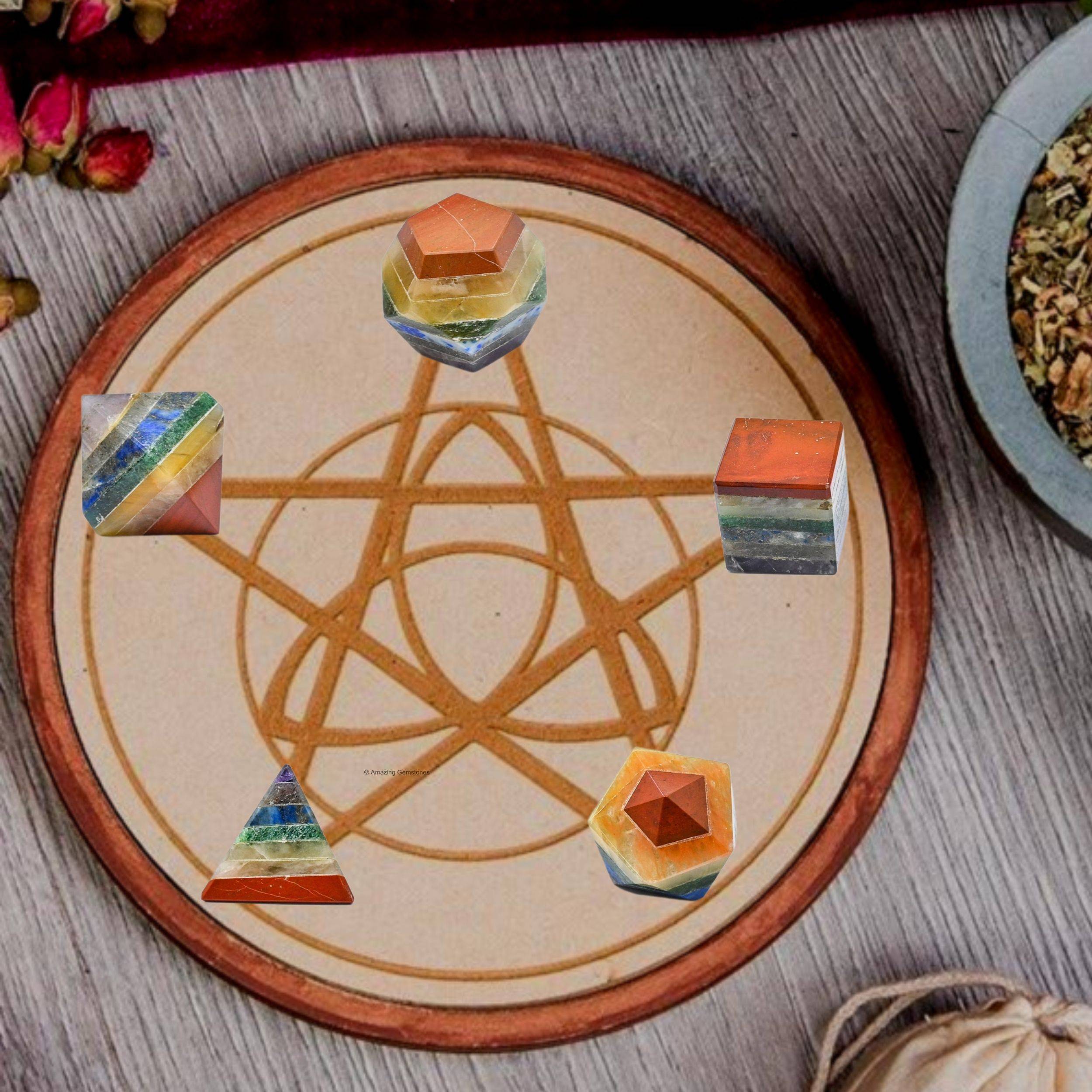 Platonic solids can be
used in various ways to enhance both spiritual practices and practical
applications. In meditation and energy work, these geometric shapes, such as
tetrahedrons or cubes, can help focus the mind and balance energy. Each solid
corresponds to specific elements and intentions, making them powerful tools for
visualizing and manifesting goals. In a home decor context, platonic solids can
be crafted into striking pieces that add a unique aesthetic to any space while
serving as reminders of harmony and balance. Educationally, they provide an
engaging way to teach geometric concepts, helping students visualize
three-dimensional shapes and their properties. In holistic healing, some
practitioners use platonic solids as therapeutic tools, believing that their
forms can channel healing energies. Whether as decorative items, educational
resources, or spiritual tools, platonic solids offer versatility and beauty,
making them valuable in a variety of settings.
Platonic solids can be
used in various ways to enhance both spiritual practices and practical
applications. In meditation and energy work, these geometric shapes, such as
tetrahedrons or cubes, can help focus the mind and balance energy. Each solid
corresponds to specific elements and intentions, making them powerful tools for
visualizing and manifesting goals. In a home decor context, platonic solids can
be crafted into striking pieces that add a unique aesthetic to any space while
serving as reminders of harmony and balance. Educationally, they provide an
engaging way to teach geometric concepts, helping students visualize
three-dimensional shapes and their properties. In holistic healing, some
practitioners use platonic solids as therapeutic tools, believing that their
forms can channel healing energies. Whether as decorative items, educational
resources, or spiritual tools, platonic solids offer versatility and beauty,
making them valuable in a variety of settings.
What Does a Platonic Solid Symbolize?
1. Creativity: The exploration of Platonic solids in art and design signifies creativity and innovation, inspiring new ways to perceive and interact with space and form.
2. Harmony: The perfect symmetry and regularity of Platonic solids represent balance and harmony in the universe.
3. Spiritual Growth: Many spiritual traditions view Platonic solids as symbols of spiritual growth and development.
4. Meditation: Some people use Platonic solids in meditation to connect with the elements or to balance their energies.
5. Education: Platonic solids serve as fundamental teaching tools in geometry to help students understand three-dimensional shapes and their properties.
How Does a Platonic Solid Work?
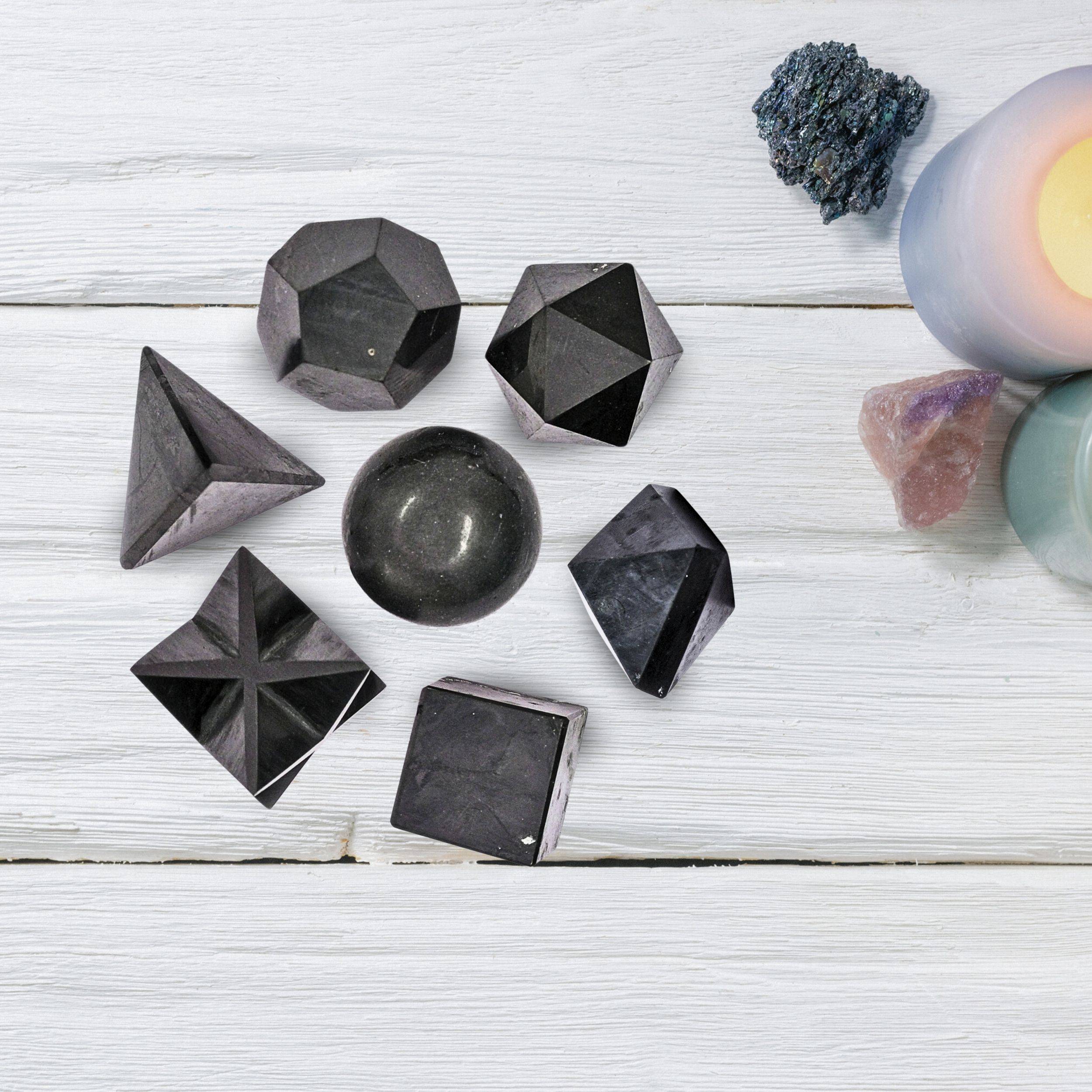 A Platonic solid works through its unique geometric
properties, which arise from its symmetrical and regular structure. Each
Platonic solid is defined by having congruent faces made up of identical
regular polygons, with the same number of faces meeting at each vertex. This
regularity contributes to their stability and balance, making them significant
in various fields, from mathematics to philosophy. In geometry, Platonic solids
are studied for their properties, such as volume, surface area, and symmetry, which
can be applied to real-world applications like crystallography and
architectural design. Additionally, they are often used in spiritual practices
and meditation, where individuals believe that each solid embodies specific
elemental energies and symbolic meanings, facilitating a deeper connection with
the universe and enhancing personal growth. Their dual nature—where each solid
corresponds to another, with vertices and faces interchanging—further
illustrates the interconnectedness of different forms and ideas, emphasizing
the harmony found in their geometric design.
A Platonic solid works through its unique geometric
properties, which arise from its symmetrical and regular structure. Each
Platonic solid is defined by having congruent faces made up of identical
regular polygons, with the same number of faces meeting at each vertex. This
regularity contributes to their stability and balance, making them significant
in various fields, from mathematics to philosophy. In geometry, Platonic solids
are studied for their properties, such as volume, surface area, and symmetry, which
can be applied to real-world applications like crystallography and
architectural design. Additionally, they are often used in spiritual practices
and meditation, where individuals believe that each solid embodies specific
elemental energies and symbolic meanings, facilitating a deeper connection with
the universe and enhancing personal growth. Their dual nature—where each solid
corresponds to another, with vertices and faces interchanging—further
illustrates the interconnectedness of different forms and ideas, emphasizing
the harmony found in their geometric design.
How to Spot Real and Fake Platonic Solid?
Spotting real and fake Platonic solids requires careful observation of their material, craftsmanship, and geometric accuracy. Genuine Platonic solids are typically crafted from high-quality materials such as crystal, glass, or metal, and they exhibit precise geometric forms with perfectly symmetrical faces. When examining the solid, look for uniformity in size and shape; all faces should be identical, and edges should be smooth and well-defined. Authentic Platonic solids also feel substantial and balanced in hand, without any irregularities or imperfections. In contrast, fake versions may be made from lower-quality materials like plastic or resin, leading to inconsistencies in shape and texture. Additionally, inspect any markings or engravings; real crystal or metal pieces often have authenticity stamps or brand markings, while fake ones might lack these details or have poorly executed engravings. By paying close attention to these characteristics, you can more easily discern between genuine and counterfeit Platonic solids.
How to Care the Platonic Solid?
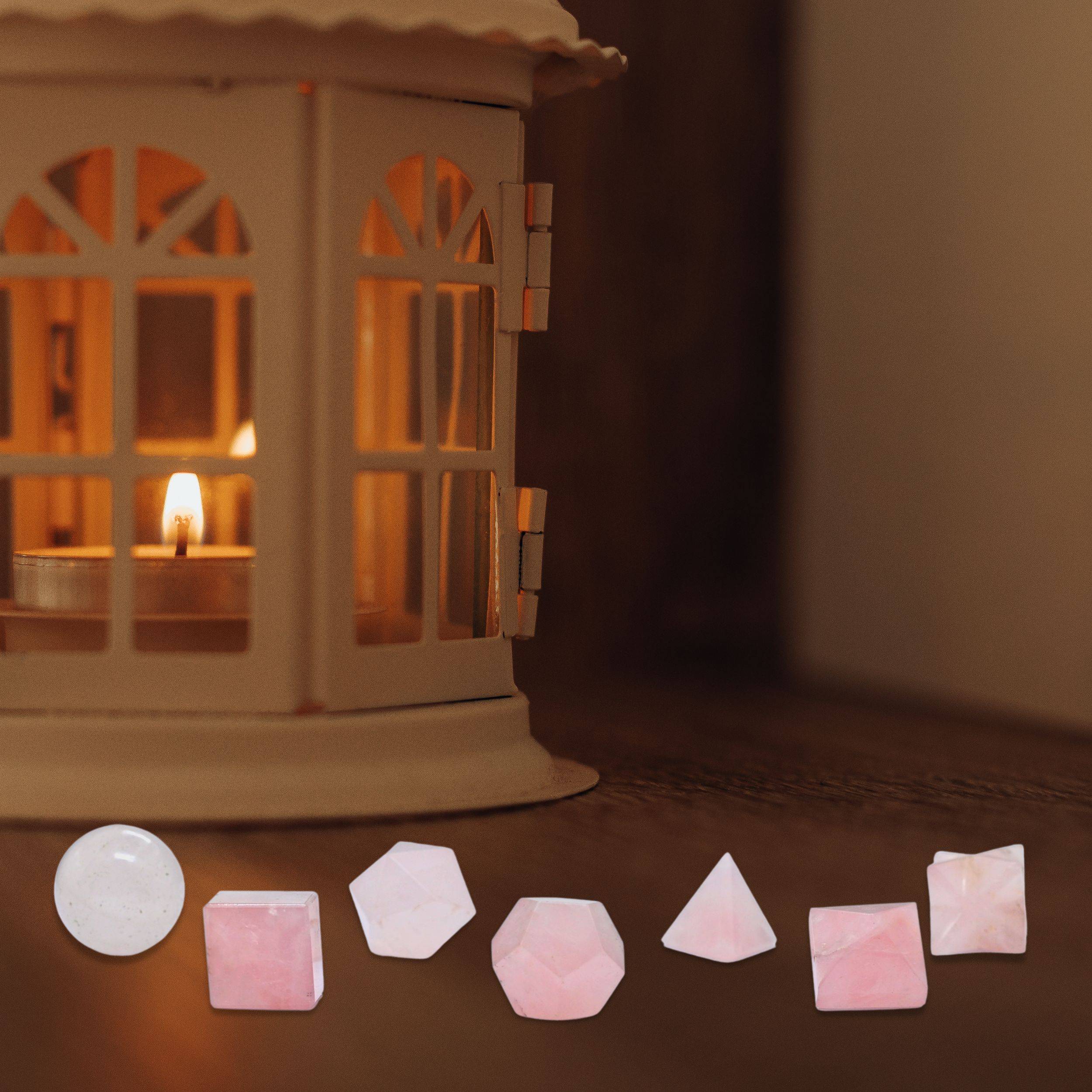 Caring for Platonic solids is essential to maintain
their beauty and integrity, especially if they are made from crystals or other
delicate materials. To keep them in pristine condition, start by regularly
dusting them with a soft, lint-free cloth to remove any debris or fingerprints.
For deeper cleaning, use a damp cloth with a mild soap solution, avoiding harsh
chemicals that could damage the surface. If your Platonic solid is made of
crystals, you can also cleanse it energetically by placing it under running
water for a few minutes or using sound cleansing methods, such as ringing a
bell or using singing bowls. Be sure to avoid exposing your Platonic solids to
extreme temperatures or direct sunlight for prolonged periods, as this can
cause fading or damage. When not in use, store them in a protective case or
wrap them in soft fabric to prevent scratches and accidental damage. By
following these care guidelines, you can preserve the beauty and energy of your
Platonic solids for years to come.
Caring for Platonic solids is essential to maintain
their beauty and integrity, especially if they are made from crystals or other
delicate materials. To keep them in pristine condition, start by regularly
dusting them with a soft, lint-free cloth to remove any debris or fingerprints.
For deeper cleaning, use a damp cloth with a mild soap solution, avoiding harsh
chemicals that could damage the surface. If your Platonic solid is made of
crystals, you can also cleanse it energetically by placing it under running
water for a few minutes or using sound cleansing methods, such as ringing a
bell or using singing bowls. Be sure to avoid exposing your Platonic solids to
extreme temperatures or direct sunlight for prolonged periods, as this can
cause fading or damage. When not in use, store them in a protective case or
wrap them in soft fabric to prevent scratches and accidental damage. By
following these care guidelines, you can preserve the beauty and energy of your
Platonic solids for years to come.
"Platonic solids are sacred geometric shapes that enhance spiritual practices by promoting healing, balance, and harmony. They are ideal for meditation and energy work."